
Your Unique Voice Isn't Something You Invent. It's Something You Uncover.

Backstage Wisdom Podcast • EP 3
A Conversation with Dixon Nacey on Creativity, Growth and Building a Sustainable Life in Music
How do we find our own voice as musicians? Is it something we create through years of practice—or something that has been there all along, waiting to be uncovered?
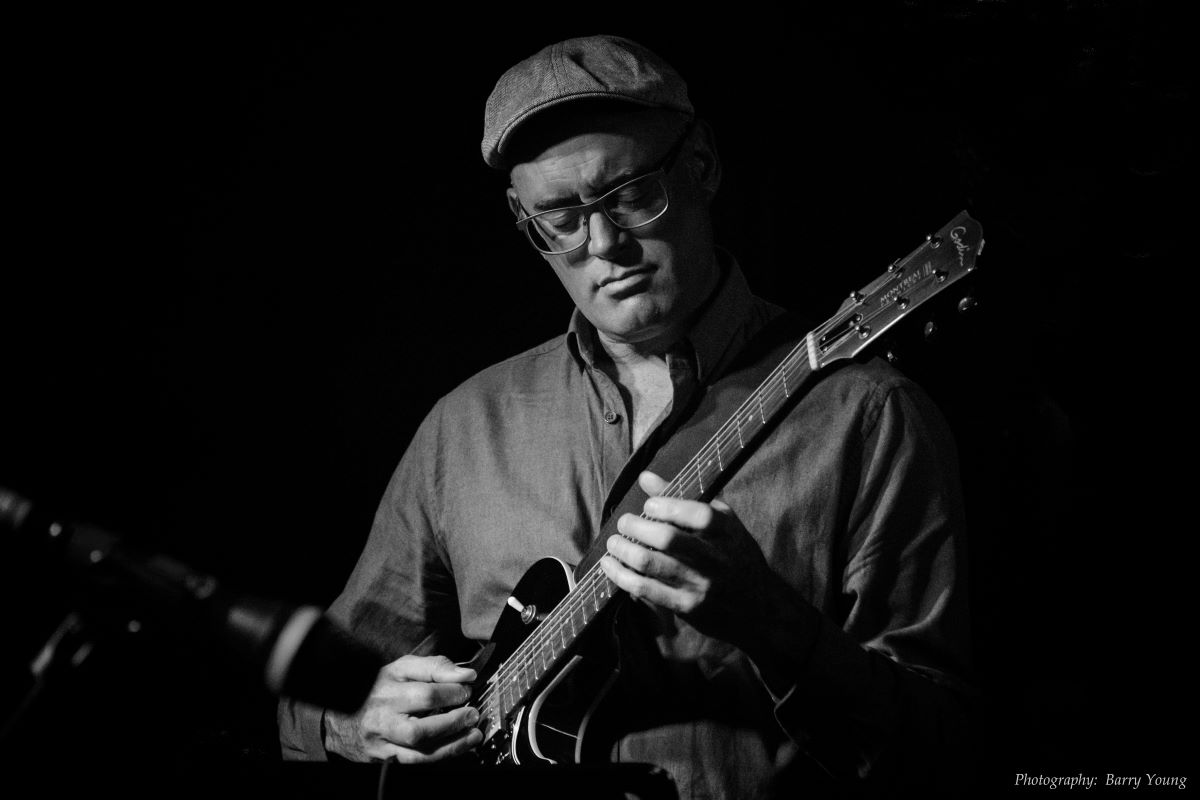
New Zealand guitarist, arranger, educator and musical director Dixon Nacey has spent more than three decades exploring exactly these questions. Having recorded three solo albums and worked with artists around the world, he has discovered that a fulfilling musical life isn't built on chasing recognition, but on developing a deeper relationship with music itself.
In this conversation with Marco Hohner on the Backstage Wisdom Podcast, Dixon reflects on creativity, perfectionism and the realities of building a sustainable career without losing the joy that first drew him to music. Together, they explore why playing cover gigs isn't "selling out", how imitating our musical heroes can help us discover our own voice, and why the greatest reward isn't found on stage—but in the lifelong process of becoming the musician we're meant to be.
More than a conversation about music, this episode is an invitation to rethink success itself. It reminds us that our artistic voice isn't something we invent. It's something we gradually uncover.
🎧 Listen to the full conversation on the Backstage Wisdom Podcast. This episode is in English.
Key Takeaways
Your Voice Is Already There
Finding your own voice isn't about becoming someone new. It's about listening closely enough to recognise what has always been uniquely yours. Technique can support that journey—but it can never replace authenticity.
Sometimes the Music Plays You If You Let It
The deepest musical experiences can't always be explained. When preparation meets complete presence, there are moments where the ego steps aside and the music seems to flow through us rather than from us.
A Sustainable Career Begins Long Before the Stage
The greatest reward isn't applause or recognition. It's building a daily relationship with music that continues to inspire you, whether you're performing for thousands of people or practising alone in your room.
Deep Dive
Your Voice Is Already There
Finding your own voice is one of the greatest ambitions many musicians have. We often imagine it as something waiting at the end of years of practice—as though one day we'll finally become original enough to sound like ourselves. Dixon Nacey offers a surprisingly different perspective. He believes our musical voice isn't something we create from scratch. It's something we gradually uncover.
Throughout the conversation, Dixon returns to an idea that feels both simple and deeply reassuring: every musician already has a unique perspective. The challenge isn't inventing something completely new. It's learning to trust what naturally comes out when we stop trying to sound like somebody else.
Paradoxically, that journey often begins with imitation. Dixon openly talks about learning from his musical heroes, absorbing their phrasing, their tone and the way they approached music. Far from seeing this as copying, he describes it as one of the most important stages of artistic growth. Every influence becomes another layer of understanding. Over time, those influences stop sounding like borrowed ideas and begin to merge into something unmistakably personal.
That shift rarely happens overnight. It develops through years of listening, experimenting and making countless small artistic choices. The more experience we gain, the more we realise that authenticity isn't about avoiding influence. It's about allowing those influences to pass through our own personality instead of hiding behind them.
Perhaps that's why searching for your voice can sometimes feel frustrating. We keep looking for something extraordinary, while overlooking the quiet qualities that already make us different from everyone else. According to Dixon, discovering your artistic voice is less like building a new identity and more like removing the layers that prevent it from being heard.
Sometimes the Music Plays You
Most musicians spend years learning how to stay in control. We practise difficult passages until every movement becomes automatic, analyse mistakes in microscopic detail and work tirelessly to eliminate uncertainty. It's an essential part of becoming a skilled musician. But at some point, Dixon Nacey suggests, the role of control begins to change.
During one particularly memorable performance, he experienced something that was difficult to explain. For a brief moment, it felt as though he was observing himself from the outside rather than consciously directing every note he played. Instead of describing it as something mystical, Dixon sees it as a reminder of what can happen when preparation and presence finally meet. The technical work had already been done. In that moment, there was nothing left to force. The music simply unfolded.
"Maybe control's the answer for preparation—not for performance."
— Dixon Nacey
That distinction feels surprisingly liberating. So often we carry the mindset of the practice room onto the stage, believing that every note still needs to be monitored, corrected and evaluated in real time. But performance asks something different of us. It asks us to trust the countless hours we've already invested and to be fully present with the music, the audience and the moment itself.
For Dixon, improvisation illustrates this beautifully. The goal isn't to think faster than everyone else or to predict every musical idea before it appears. It's to create the conditions where instinct, experience and curiosity can work together without constant interference. Those moments can't be manufactured on demand, but they become far more likely when we stop trying to control every outcome.
Perhaps this idea reaches beyond music more than we realise. We prepare carefully for conversations, performances, auditions and important moments throughout our lives. Yet eventually there comes a point where preparation has done its job. From there, growth often depends on something much harder: trusting ourselves enough to let go.
A Sustainable Career Is Built Long Before the Stage
When people imagine the life of a professional musician, they often picture the visible moments: the concerts, the tours, the applause and the recognition. Yet throughout this conversation, Dixon gently shifts our attention elsewhere. Again and again, he returns to the idea that these moments are only a small part of a much bigger picture.
The stage isn't where a musical life is built. It's where years of quiet work become visible.
For Dixon, the greatest reward has never been a successful performance or an impressive résumé. It's the daily process of learning, listening, experimenting and slowly discovering something new about music—and about himself. That perspective changes everything. Success is no longer measured only by what happens in front of an audience, but by whether the journey itself continues to feel meaningful.
This is also why Dixon speaks so openly about playing cover gigs. Rather than seeing them as a compromise, he sees them as part of a balanced musical life. They provide opportunities to keep performing, to earn a living and, perhaps most importantly, to create the freedom to pursue the projects that matter most. Building a sustainable career doesn't mean choosing between artistic integrity and financial stability. It means finding a way for both to support each other instead of pulling in opposite directions.
Perhaps that's one of the most reassuring ideas to take away from this conversation. There is no single path to becoming a fulfilled musician. Every career looks different. Every artist finds their own rhythm. What matters isn't whether your journey resembles someone else's, but whether it allows you to keep growing, stay curious and preserve the love for music that brought you here in the first place.
Because in the end, a sustainable life in music isn't built one performance at a time. It's built in the thousands of ordinary moments when nobody is watching—and you choose, once again, to pick up your instrument simply because you love making music.
Continue the Conversation
The best conversations don't end when the episode is over. They continue in the questions we ask ourselves.
1. Whose voice are you still trying to sound like?
What would change if you trusted your own musical instincts just a little more?
2. Where in your musical life are you trying to control something that might actually require more trust?
What would "getting out of the way" look like for you?
3. What part of making music brings you the deepest joy—even if nobody ever hears it?
How could you create more space for that in your everyday life?
Keep Exploring
Did this conversation resonate with you?
On the Backstage Wisdom Podcast, Marco Hohner speaks with musicians and experts about the realities of life behind the stage – through honest, thought-provoking conversations that go beyond easy answers.
Your Backstage Journey
Every musician's path is unique. So are the challenges that come with it.
If you're looking for greater clarity, confidence and balance – both on and off the stage – discover Marco Hohner's holistic Coaching for musicians.