
You Are the Instrument, Not the One Playing | Punnu Wasu
Backstage Wisdom Podcast • EP 7
Why feeling music matters more than mastering it — and how presence, surrender and devotion can bring musicians more freedom, joy and flow
What happens when a musician stops trying to prove themselves — and starts offering their music instead?
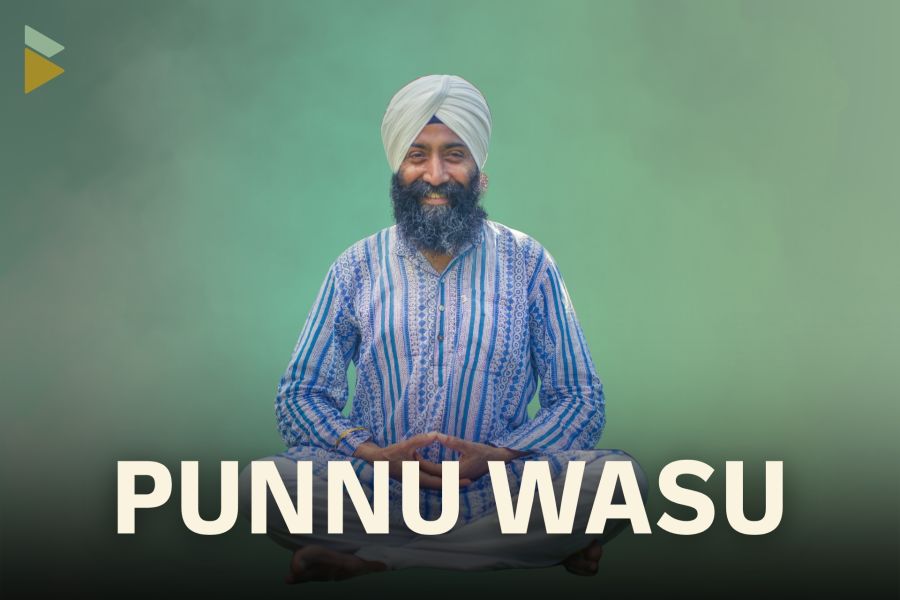
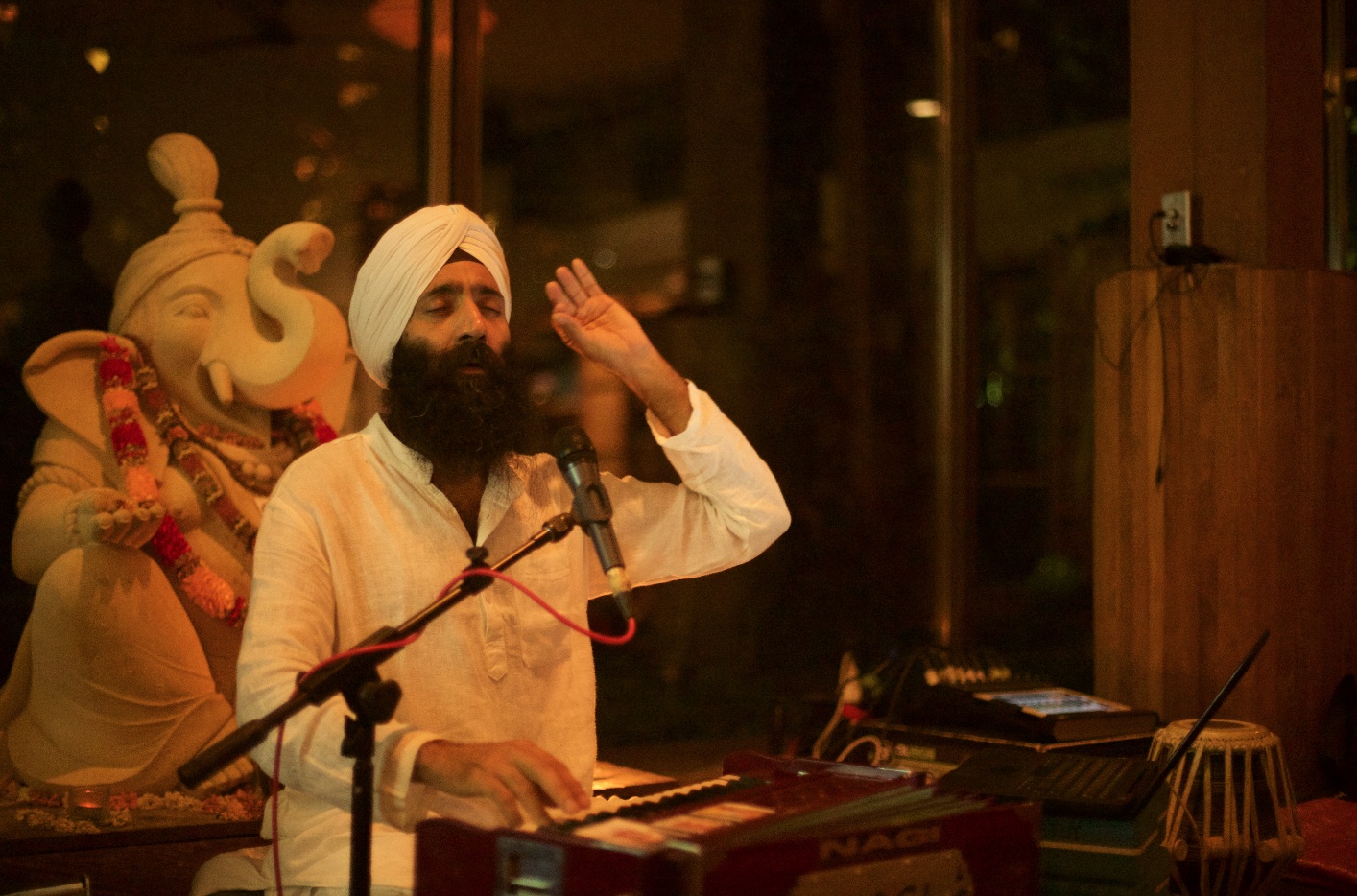
Punnu Wasu grew up in South India in a family where spirituality, yoga and music were never separate things. He received his first harmonium from his father at age five and has been singing Kirtan — devotional chanting — ever since. Today he's a musician, facilitator and (sound) healer who runs his own academy and travels between Bali and Switzerland, teaching people how to move beyond performance and into a deeper state of devotion and flow.
In Episode 7 of the Backstage Wisdom Podcast, Punnu talks about the difference between thinking music and feeling music, why technical skill alone was never meant to carry a performance, and how the comparison trap — measuring ourselves against other musicians — quietly drains the joy out of playing. He also shares why meditation isn't a separate practice bolted onto a musician's life, but a bridge to presence itself, and introduces an idea that reframes what it even means to perform: that we might not be the ones playing music — music might be playing through us.
🎧 Listen to the full conversation on the Backstage Wisdom Podcast.
Key Takeaways
Stop thinking your music — start feeling it
Technical skill gets you in tune and on beat, but Punnu is clear that skill alone only produces "thinking music." The next time you sit down to practice or step on stage, try shifting your attention from am I doing this right to what am I feeling right now. Where skill ends and feeling begins is where an offering starts.
Learn from musicians who are better than you — don't compete with them
Comparing yourself to other musicians is, in Punnu's words, simply absurd — nobody else has your voice or your path. Instead of measuring yourself against someone more skilled, try treating every encounter with a stronger musician as free tuition: What can I take from watching them, without turning it into a verdict on myself?
Build a practice that brings you into the present — on and off stage
Meditation isn't a separate ritual bolted onto a musician's life; it's what eases the burden of "making it happen." Find one small, repeatable practice — a few minutes of stillness, a walk, even brushing your teeth with full attention — and use it to arrive in the present moment before you play, rather than only preparing for the next gig.
Deep Dive
Stop Thinking Your Music — Start Feeling It
When was the last time you played something without checking, somewhere in the back of your mind, whether you were doing it right? Most of us never fully stop doing this. We learn an instrument through correction — right note, wrong note, in tune, out of tune — and over years that checking becomes so automatic we stop noticing it's even happening. It quietly becomes the default lens we play through.
Punnu names this split directly: there is music that comes from thinking, and music that comes from feeling. Skill, he says, is necessary — you need to be in tone, in the beat, able to play the chords. But when skill is all that's present, what you're left with is still just thinking music. Feeling is what turns the same notes into something else entirely. In Kirtan, he explains, both are present at once: the years of practice are still there, but they stop being the point. What's being offered is no longer a demonstration of ability — it's something closer to a gift, given without expecting applause or approval in return.
Here's the part worth sitting with: this isn't really about Kirtan, or about Indian classical music, or about any particular genre. It's about where your attention goes while you're playing. Thinking music is checking yourself from the outside while you perform. Feeling music is actually being inside the sound. Most musicians have experienced both — the flawless gig that felt effortless, and the technically solid one that felt completely hollow. The difference usually wasn't skill. It was where the attention was.
When thinking and feeling merge, music stops being a performance and becomes an offering.
Learn From Musicians Who Are Better Than You Instead of Competing With Them
Who's the musician you quietly measure yourself against? Almost everyone has one — someone whose skill makes your own feel smaller by comparison. Punnu doesn't pretend this feeling doesn't exist; he names it as one of the biggest challenges musicians face. But his response to it isn't the usual "just be confident" advice. It's a complete reframe of what the comparison is even for.
He describes comparison as absurd at its core, simply because nobody is like you and nobody is like them — the comparison itself rests on a false premise. But rather than stopping there, he goes one step further: instead of comparing, he deliberately seeks out musicians who are better than him. Not despite the discomfort that might bring up, but because of what becomes possible in their presence — he describes wanting the best musicians around him specifically so that he can reach his own best expression. He even points to something he's observed in his field: some musicians avoid inviting better players into their projects, afraid of being overshadowed. His approach is the opposite on purpose.
This only works, though, if the inner move actually happens — swapping how do I measure up for what can I take from this. Punnu is blunt about where the first question leads: comparison measures, and if you follow that voice, it takes you somewhere close to disaster. The same skilled musician who can wound your confidence from a distance can teach you something valuable up close — the difference is simply which question you let yourself ask.
Instead of comparing yourself to more skilled musicians, Punnu treats their presence as an invitation to learn — comparison measures, learning grows.
Build a Practice That Brings You Into the Present — On and Off Stage
What if meditation isn't something you add to your life as a musician, but something that quietly removes weight from it? That's roughly how Punnu frames it — not another discipline competing for your time, but a bridge that connects you back to yourself, on stage and off.
He's careful to separate the technique from the actual thing. Sitting with your eyes closed, he says, is just a known method — a technique, not meditation itself. Meditation, as he describes it, is something closer to a continuous state: being fully present with whoever and whatever is in front of you, available 24/7, not confined to a cushion or a set number of minutes. That reframing matters, because it means the practice isn't limited to the hour before a performance — brushing your teeth, taking a walk, or simply listening to someone can become meditation too, as long as awareness and feeling are actually there.
He also names something many musicians will recognize without ever having put a word to it: the tendency, after a gig, to reach for a party, a drink, or whatever numbs the comedown. His read on this is pointed — when the music itself hasn't fulfilled that inner longing for connection, people go looking for substitutes. A steady practice, even a small one, is what interrupts that cycle before it starts, by addressing the actual need instead of what gets grabbed in its place.
A small, repeatable practice that brings you into the present removes the pressure of "making it happen" — and makes it easier to recognize what you're really reaching for when the music isn't enough on its own.
Continue the Conversation
The best conversations don't end when the episode is over. They continue in the questions we ask ourselves.
1. Journal prompt: Write for 10 minutes on this — "Where in my playing am I still checking myself, instead of feeling it?"
2. Practice: Next time you catch yourself comparing to another musician, write down one specific thing you could actually learn from them.
3. Reflection: Pick one small, repeatable moment in your day — a walk, brushing your teeth, a few minutes of stillness — and try bringing full presence to it this week.
Keep Exploring
Did this conversation resonate with you?
On the Backstage Wisdom Podcast, Marco Hohner speaks with musicians and experts about the realities of life behind the stage – through honest, thought-provoking conversations that go beyond easy answers.
Your Backstage Journey
Every musician's path is unique. So are the challenges that come with it.
If you're looking for greater clarity, confidence and balance – both on and off the stage – discover Marco Hohner's holistic Coaching for musicians.